Residential practice space

Putting Green Installation

A residential putting green combines practice goals with careful base construction, contours, drainage, cups, fringe, transitions, ball-roll expectations, and ongoing surface care.

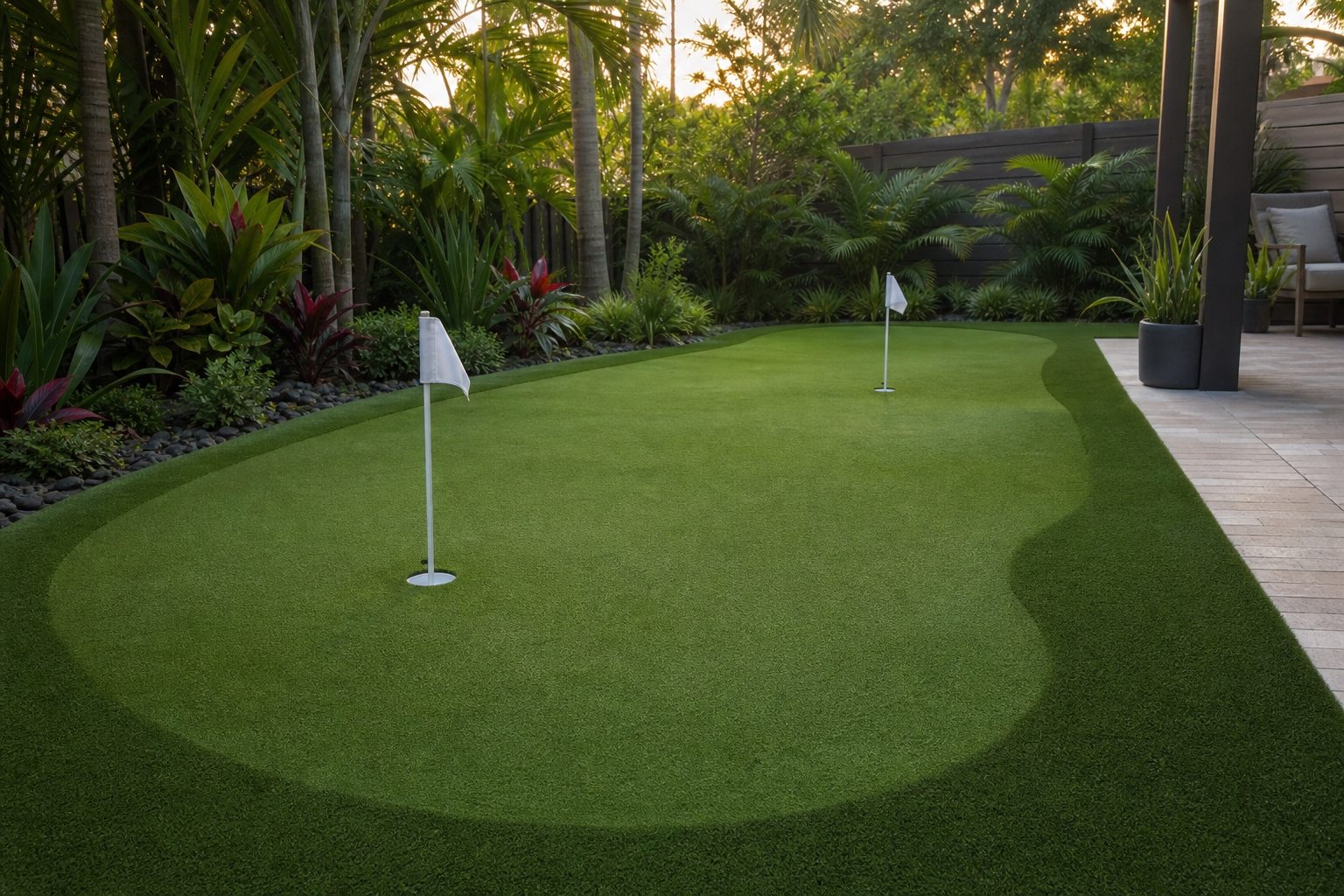
Compact artificial turf putting green and surrounding fringe

Practice begins with purpose

A useful home green is shaped around the shots it needs to support

A putting green for short straight putts asks something different from a larger surface with several cups, breaking putts, fringe, and approach shots. Available distance, cup count, preferred practice routines, walking paths, and the relationship to patios or the rest of the yard establish the design before turf color or blade appearance becomes the focus.

The playing surface is also only the top of a shaped assembly. Base material, compaction, contour transitions, cup setting, drainage, seam placement, putting turf, fringe, infill, and final rolling or grooming all influence how the green feels. A clear plan connects those construction decisions to realistic household practice goals.
Space and existing conditions

Dimensions, slope, access, and surrounding features set practical limits

A putting green can fit an open backyard, a side area, or a defined section beside other turf when there is enough room for the intended putts and safe circulation. The shape needs to respect doors, pool decks, planting edges, drains, irrigation, utilities, fences, roots, and any route needed for equipment or future property maintenance.

Existing slope and water movement are checked before contours are drawn. A naturally sloped area may support part of the concept, but soft ground, abrupt elevation changes, persistent ponding, or a narrow finished transition can limit the design. The green should not direct runoff toward a structure or trap water inside a decorative shape.

Base and contour construction

The desired breaks are built into a stable, compacted foundation

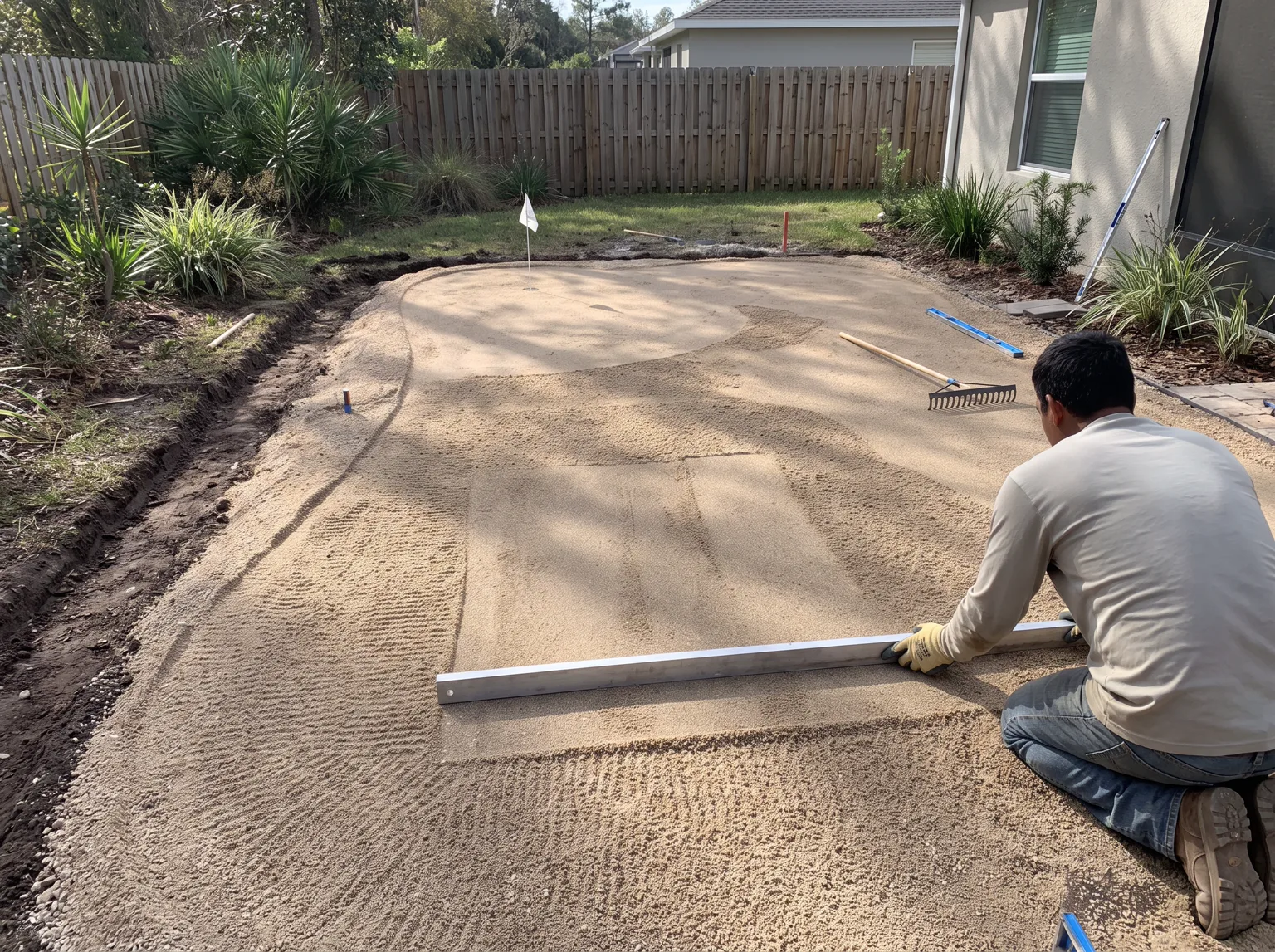
After unsuitable surface material is removed, the area is brought to the required depth and rough grade. Aggregate is placed and compacted in a controlled manner so broad elevations and smaller contour changes remain stable. Cups and drainage details are coordinated with this work because their elevations cannot be treated as an afterthought once the finish layer is down.

The final base is refined to remove sharp irregularities while preserving intentional breaks. Putting turf is oriented and cut to the planned shape, seams are located away from critical roll lines where possible, and cups are finished cleanly. Fringe or surrounding turf is connected at a deliberate elevation, then infill and grooming are adjusted for the selected materials.

Putting-green base contours being shaped before turf placement.

Scope and playing expectations

A green estimate needs more detail than square footage and cup count

The scope should record the green footprint, access, removal, base depth and material, contour concept, drainage approach, cup quantity and locations, putting turf, fringe, seams, perimeter treatment, transitions, infill, and cleanup. Curves, elevation changes, tight access, and connections to an existing patio or landscape can add work without adding much measured area.

Ball roll is influenced by fiber construction, pile height, infill, base smoothness, contour, moisture, debris, brushing, and use. A design can pursue a particular feel and useful practice distances, but an exact measured speed or professional-course performance is not promised. The finished green will also change subtly as materials settle and maintenance conditions vary.

Design limits and alternatives

More contour is not always more useful practice

A small area crowded with steep breaks, several cups, and narrow fringe can become difficult to maintain and less useful for repeatable practice. Tight curves also increase cutting and seam challenges. A simpler shape with one or two well-placed cups may provide clearer practice lines and cleaner transitions than forcing every requested feature into limited space.

Trees, strong root zones, chronic standing water, unstable fill, or a severe existing slope may require a smaller footprint, site correction, or another location. A putting surface does not replace structural retaining work or solve runoff arriving from outside the area. Those conditions need their own evaluation before detailed contour work begins.

Putting-surface care

Clean fibers and even infill help preserve a consistent roll

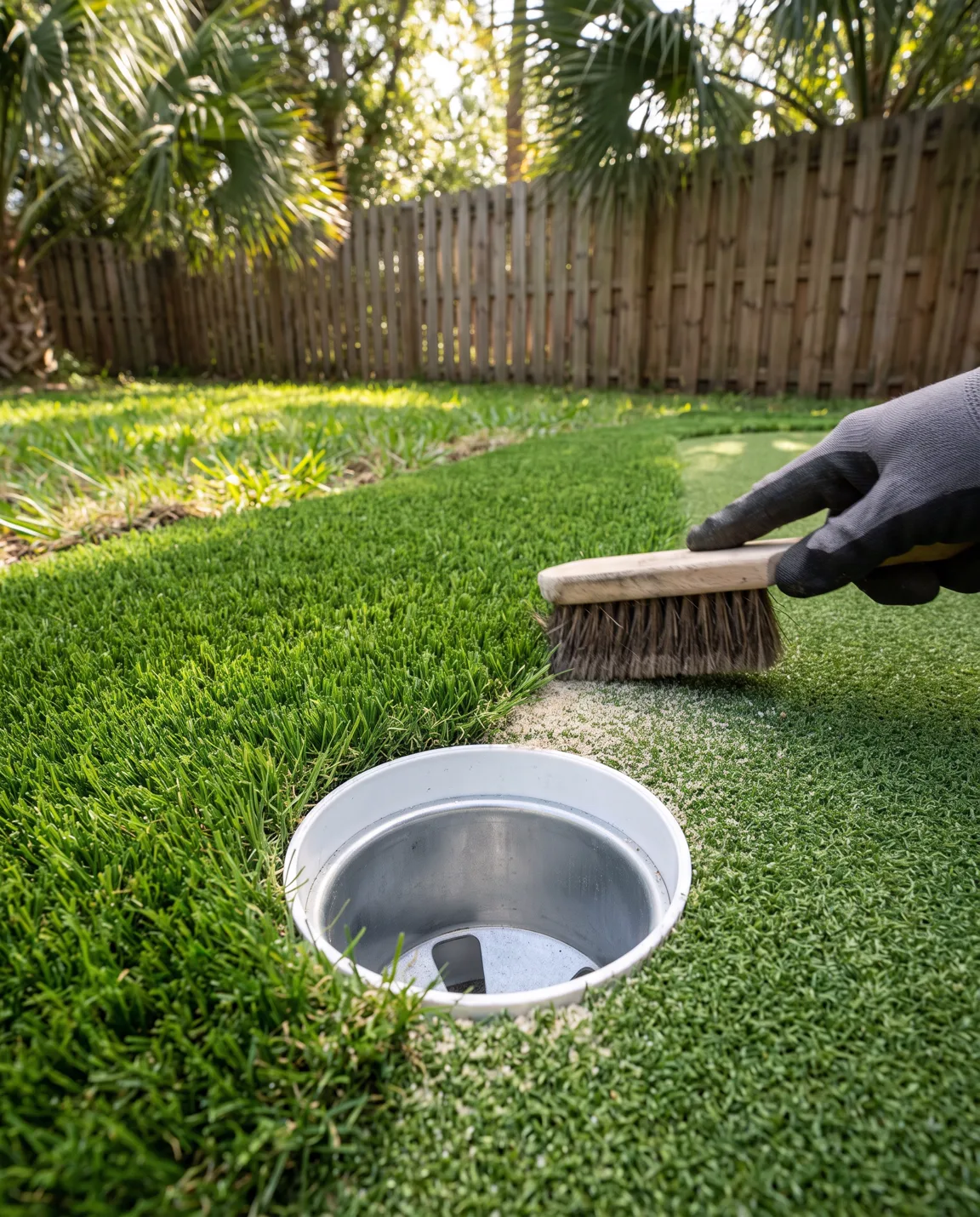
Leaves, sand, soil, pollen, and clipped landscape material can interrupt ball roll and work into the fibers. Regular light debris removal is preferable to allowing buildup around cups and fringe. Brushing and infill attention should follow the selected system, with care taken not to pull seams, disturb cup edges, or create uneven bands across the green.

Cup openings, perimeter transitions, seams, low spots, and heavily used stance areas need periodic inspection. Furniture and general yard storage should stay off the putting surface. Heat sources, sharp tools, and aggressive equipment can damage fibers or backing. If roll changes suddenly, debris, infill movement, settlement, or moisture should be checked before assuming the turf itself has failed.

Putting-green cup and fringe finishing detail.

Central Florida conditions

Downpours, heat, irrigation, and landscape debris affect daily play

A Deltona putting area may experience intense sun followed by heavy rain. Drainage and surrounding grade need to move water without washing material across the surface or leaving a cup in a low pocket. Reflected heat from glass or hardscape also deserves attention when choosing location and planning nearby use.

Irrigation overspray and trees can introduce moisture, leaves, pollen, and soil even though the green itself is synthetic. Pool decks and patios may direct runoff toward the fringe, while shaded edges can dry more slowly. These conditions affect cleanup and perceived speed from one day to another without indicating that a fixed performance number was part of the installation.

Putting-green questions

How is a residential putting-green shape chosen?

The shape starts with available dimensions, safe circulation, desired putt lengths, cup locations, fringe, existing slope, and nearby hardscape or landscaping. A clean, usable layout usually matters more than adding curves that shorten practice lines or complicate seams and maintenance.

Can an exact putting-green speed be promised?

No. Turf construction, infill, base smoothness, contour, moisture, debris, brushing, temperature, and use all affect perceived ball roll. Materials and design can target a playing character, but a fixed reading or professional-course result is not part of this site's claims.

How many cups should a home green have?

Cup count follows the size, intended practice, contour, and need for clear putting lines. Several cups can add variety, but crowding them into a small surface may weaken useful distances and create extra detail around cuts, drainage, and maintenance.

How is drainage handled beneath a putting green?

The existing grade and incoming water are assessed first. The base and surrounding elevations are then shaped to support the green while preserving an appropriate water route. Cups, fringe, patios, and low edges should not become places where rainfall repeatedly collects.

What maintenance helps a putting surface stay playable?

Remove leaves and grit, keep cups and fringe clear, brush and tend infill according to the material guidance, and inspect seams, edges, low spots, and stance areas. Avoid heavy storage, sharp tools, high heat, and cleaning methods that disturb the surface.

Ready to discuss this turf project?

Share the property details in an estimate request, or call to talk through the area and the work you have in mind.